
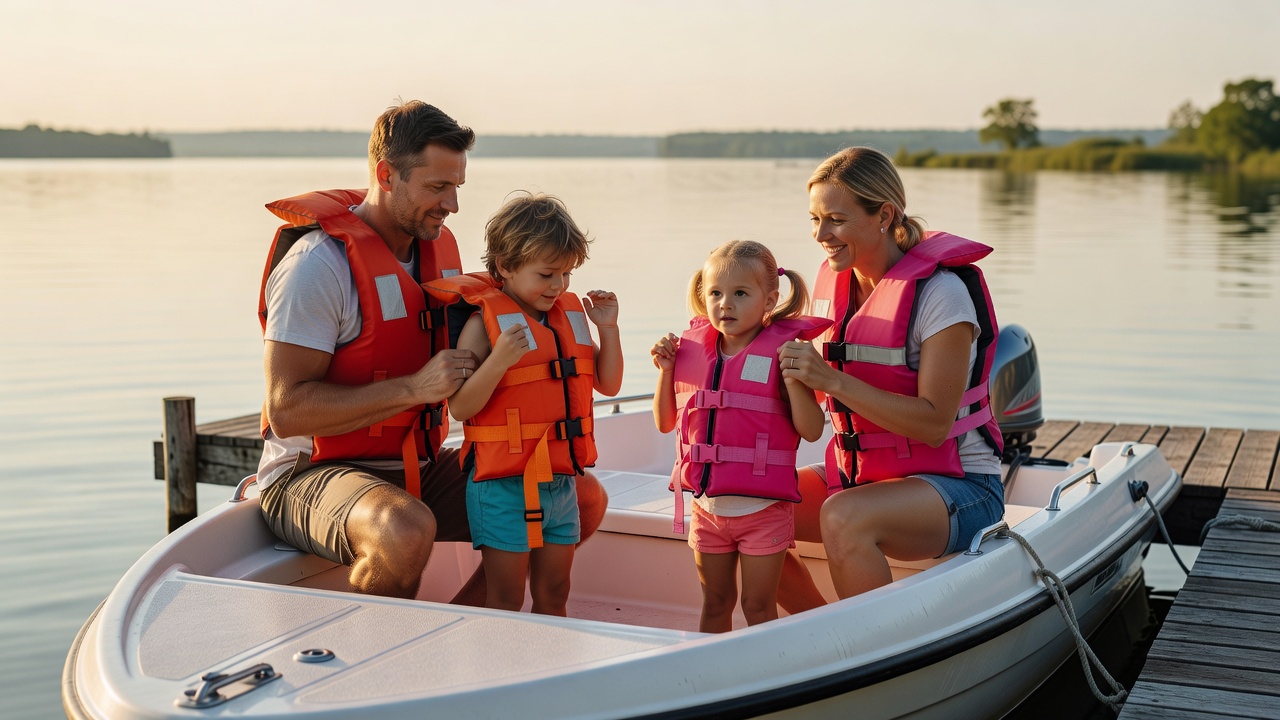
The best family boating memories are built on preparation. Most serious boating accidents involve a small number of preventable factors — not wearing life jackets, operator inattention or inexperience, alcohol, and unexpected weather. The good news is that a simple routine dramatically reduces risk. This guide focuses on US Coast Guard (USCG) requirements; if you boat elsewhere, check your national authority's rules, which are often similar.
1. Life jackets: the non-negotiable
Federal rules require a USCG-approved, properly fitting wearable life jacket for every person aboard a recreational vessel. Under federal regulation, children under 13 must wear a life jacket while the boat is underway, unless they are below deck or in an enclosed cabin. Many states set their own child-wearing ages, and where they do, the state rule applies — so check local law.
- Fit matters more than brand: infant and child jackets are sized by weight. Lift the child by the shoulders of the jacket; if it rides up past the chin or ears, it is too big.
- Choose features for little ones: infant jackets should have a head support collar and a crotch strap, and ideally a grab handle.
- Adults should wear them too: children copy parents, and a jacket stowed in a locker cannot help in a sudden capsize.
- Throwable device: boats 16 feet and longer (except canoes and kayaks) must also carry a throwable flotation device such as a ring buoy or cushion.
2. The engine cut-off switch law
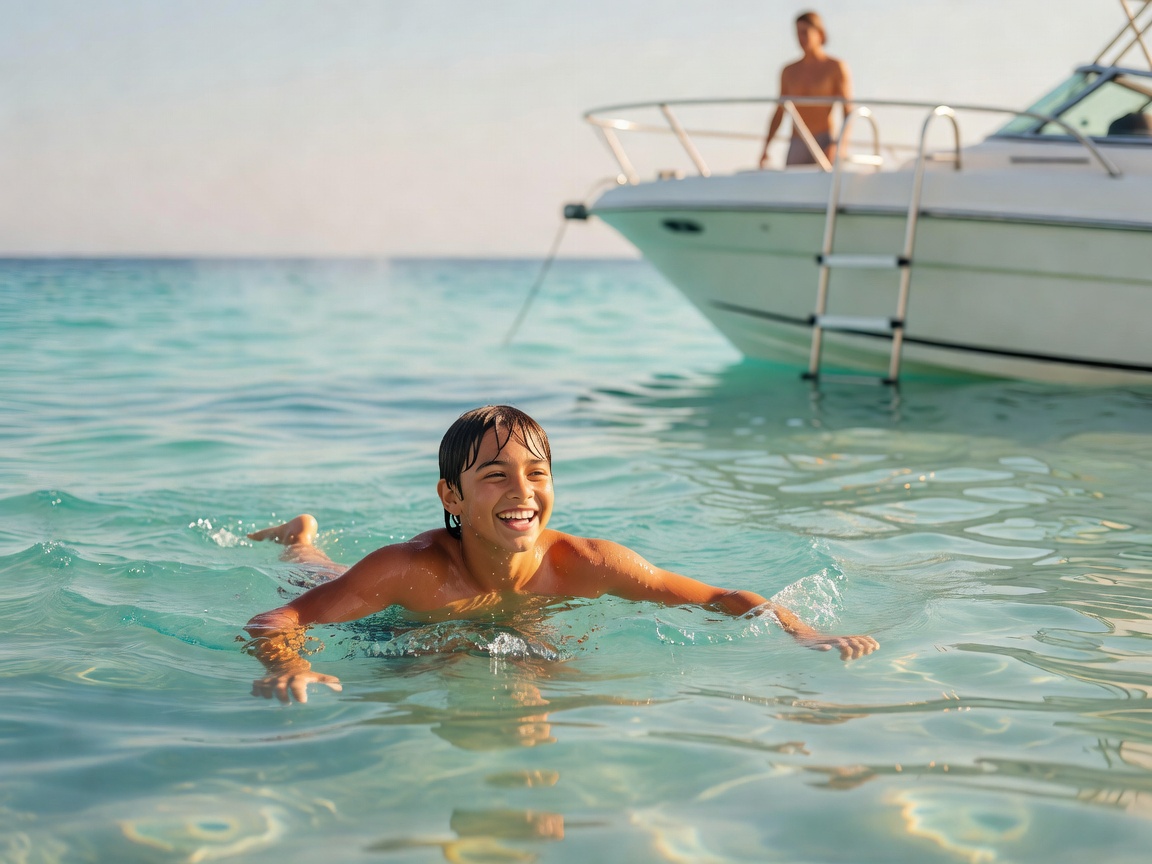
Since 1 April 2021, operators of most recreational boats under 26 feet with engines producing 3 hp or more must use an engine cut-off switch (ECOS) — the lanyard or wireless fob that kills the engine if the driver is thrown from the helm — when operating on plane or above displacement speed. It prevents the terrifying "circle of death," in which a driverless boat circles back toward people in the water. Make clipping in as automatic as fastening a car seatbelt.
3. Required equipment checklist
Exact requirements depend on boat length, type and where you operate, but a typical family runabout should carry:
- Wearable life jackets for everyone, plus a throwable device (16 ft+)
- A marine fire extinguisher where required — check the date; disposable extinguishers more than 12 years past their manufacture date must be replaced
- Visual distress signals (flares, orange smoke or an approved electric distress light) when on coastal waters or the Great Lakes
- A sound-producing device such as a whistle or horn
- Navigation lights that work, for sunset cruises
- State registration documents and boating education card where required
Book a free Vessel Safety Check with the US Coast Guard Auxiliary or US Power Squadrons. A trained examiner inspects your boat and equipment — no fines, no penalties, just peace of mind.
4. Smart extras for families
- Waterproof first-aid kit with seasickness remedies, sting relief and children's medicines
- Reef-safe sunscreen, hats, sunglasses and long-sleeved rash guards
- Plenty of drinking water — more than you think
- A handheld VHF radio and a charged phone in a waterproof pouch
- Spare dry clothes and towels in a dry bag
- An anchor with enough line for the depth, plus a paddle
5. Before you leave the dock
- Check the forecast: use the NOAA National Weather Service marine forecast and watch for afternoon thunderstorms in summer.
- File a float plan: tell someone onshore where you are going, who is aboard and when you will return.
- Brief your crew: show everyone where life jackets, the fire extinguisher and first-aid kit are, and how to call for help on the radio.
- Check fuel: follow the thirds rule — one third out, one third back, one third reserve.
- Count heads: never exceed the capacity plate.
6. What to teach your children
- Stay seated while the boat is moving, and keep hands and feet inside.
- Never swim near the back of the boat when the engine is running.
- Understand that carbon monoxide from engines and generators is odourless — no "teak surfing" or hanging on the swim platform while engines run.
- Learn "Reach, Throw, Don't Go" — help a person in the water with a pole or throwable, never by jumping in.
- Know how to make a distress call and, for older kids, how to stop the engine.
7. Get educated together
Most states require a boating education card for some or all operators. Taking a course as a family is one of the best investments you can make. The BoatUS Foundation offers free online courses accepted in many states, and the USCG's official recreational boating site provides up-to-date rules and resources.
Official resources: US Coast Guard Boating Safety · BoatUS Foundation · NWS Marine Forecasts